Blog
Leather vs PU vs Microfiber: Combat Sports Materials Guide

Why Material Selection Is the Most Important OEM Decision You’ll Make
Walk into any serious combat sports equipment conversation — whether you’re talking to a Muay Thai gym owner in Bangkok, an MMA brand founder in Los Angeles, or a boxing equipment importer in London — and the same question surfaces almost immediately: What material should I use?
It sounds like a simple choice. It isn’t. The material you select for your OEM or private label combat sports equipment affects everything: how the product feels on the first use, how it ages over three years of daily training, how it’s priced at retail, and whether it meets the regulatory requirements of the markets you’re selling into.
Three materials dominate the global combat sports manufacturing industry: genuine leather, PU (polyurethane), and microfiber. Each has a legitimate place in the market. None of them is universally superior. The right choice depends on your target market, price point, production volume, and brand positioning.
This guide breaks down each material from a manufacturing perspective — the kind of detail you won’t find in a retail product review.
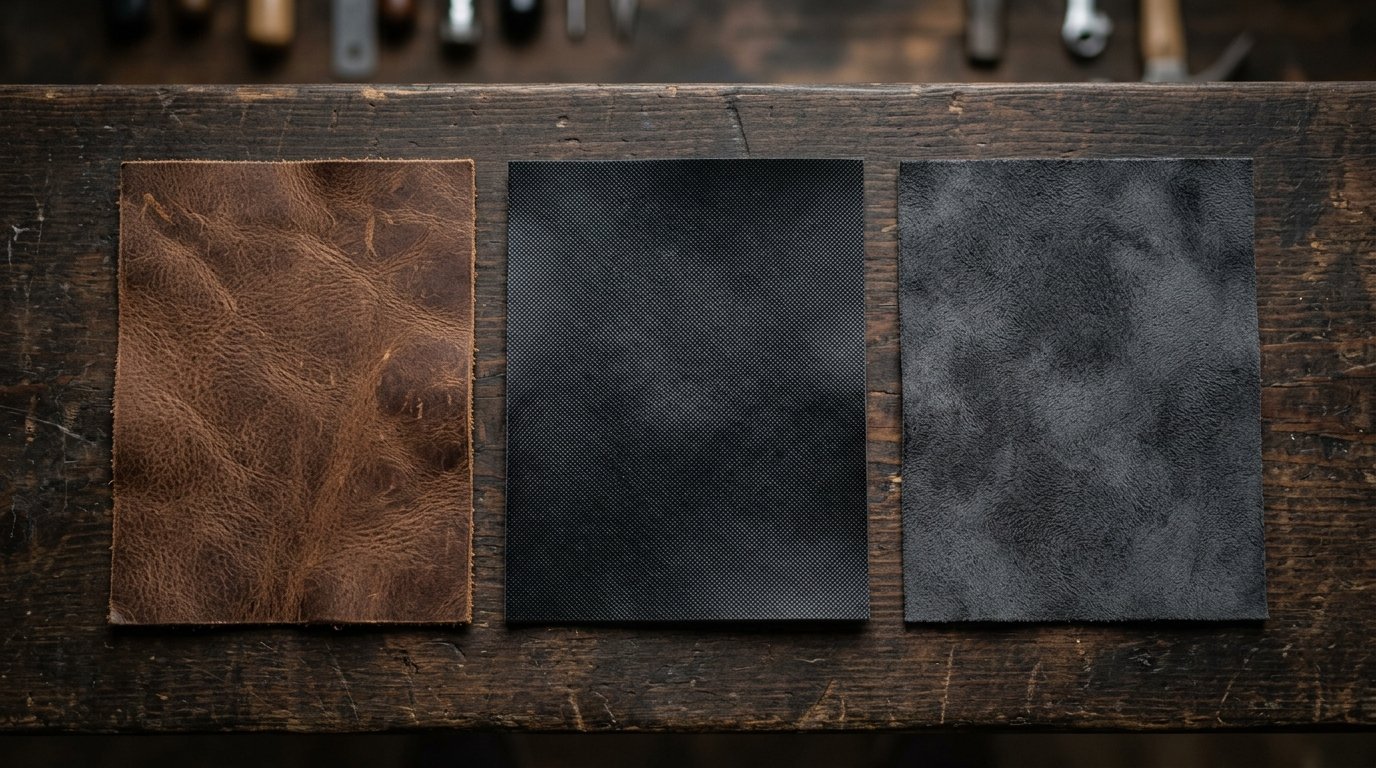
Genuine Leather: The Benchmark Everything Else Is Measured Against
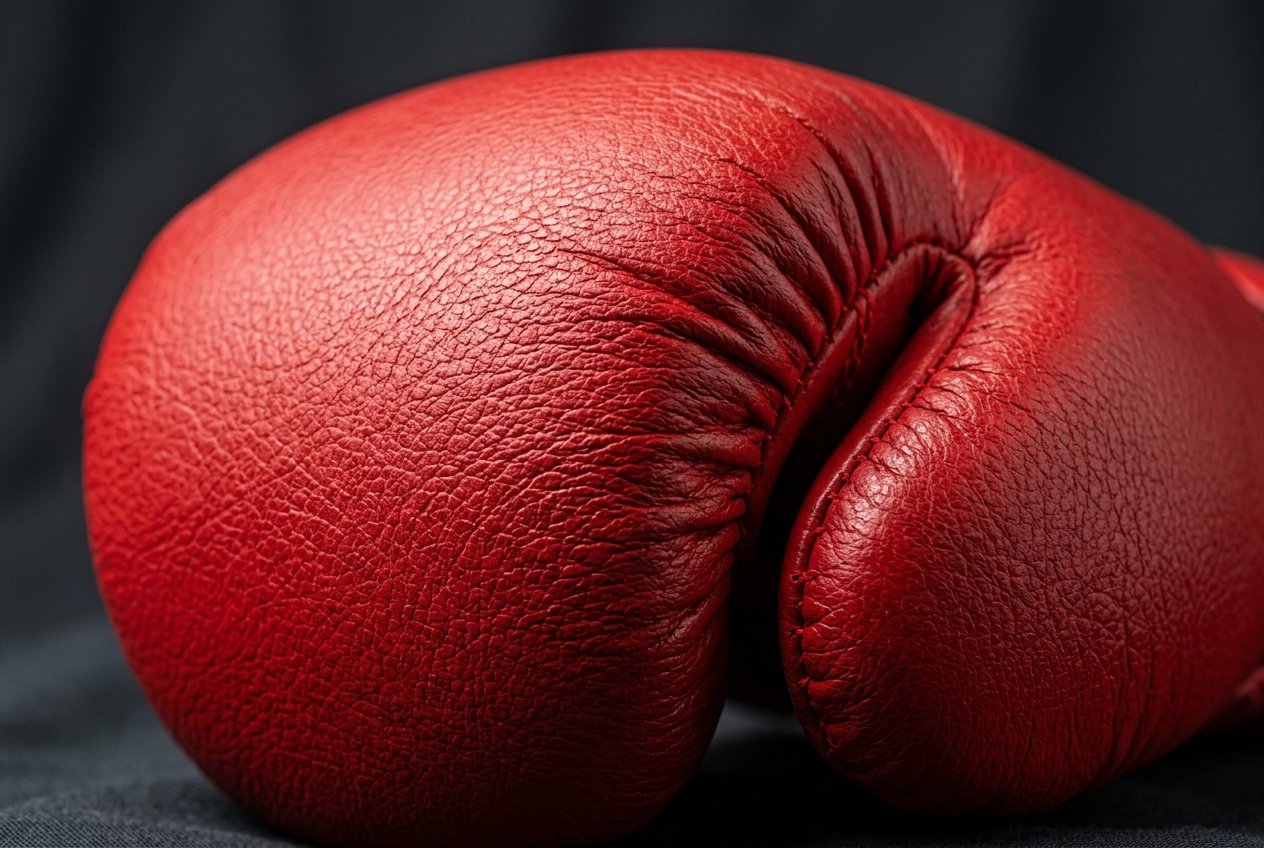
Genuine leather — primarily full-grain and top-grain cowhide — has been the material of choice for premium boxing gloves and combat sports equipment for over a century. That track record exists for good reason.
What Makes Genuine Leather Different
The core property that separates real leather from synthetic alternatives is its natural fibre structure. Cowhide consists of interwoven collagen fibres that give the material a combination of tensile strength, flexibility and breathability that synthetics have spent decades trying to replicate. Under sustained mechanical stress the kind that comes from thousands of hours of bag work — genuine leather’s fibre network distributes force in a way that synthetic laminates simply cannot match at the same weight.
At Pentapunch’s manufacturing facility in Sialkot, Pakistan which sits at the centre of one of the world’s longest-running leather goods manufacturing traditions genuine leather boxing gloves are cut from hides that go through multiple tanning, dyeing, and finishing stages before they reach the cutting floor. The choice between full-grain and top-grain leather is the first specification decision an OEM buyer needs to make.
Leather Grades Used in Combat Sports Manufacturing
| Leather Grade | Surface | Best Used For | Price Tier |
|---|---|---|---|
| Full-Grain Cowhide | Natural, unaltered grain | Professional boxing gloves, high-end MMA gear | Premium |
| Top-Grain Cowhide | Sanded, uniform finish | Mid-to-premium boxing & Muay Thai gloves | Mid-Premium |
| Split Leather | Corrected grain or suede | Training bags, secondary panels | Mid |
| Nappa / Soft Tanned | Chrome-tanned, very supple | Competition gloves, shin guards requiring flexibility | Premium |
Leather in Practice: Durability & Aging
A well-made pair of genuine leather boxing gloves from a quality Sialkot manufacturer will typically outlast comparable synthetic gloves by a considerable margin under hard training conditions. The material softens and moulds to the hand over time rather than cracking or delaminating. Stitching along stress points — the thumb attachment, the wrist cuff, and the palm panel — holds differently in leather because the material has enough structural density to grip the thread.
This longevity is also leather’s primary commercial argument. For gym owners buying gloves in bulk for daily class use, a longer product lifespan directly affects cost per use — which is a much more relevant number than the purchase price.
Leather’s Limitations
Genuine leather carries two structural disadvantages that matter to OEM buyers: cost and market access. Raw cowhide is a commodity subject to supply chain fluctuations. Full-grain leather gloves require more skilled hand labour to cut and stitch correctly because there’s little tolerance for error — waste is expensive. These factors put genuine leather products at a higher retail price point.
The second issue is increasingly relevant: the vegan and sustainability movement within combat sports. A growing segment of buyers — particularly in Western European markets — actively avoids animal-derived materials. Genuine leather is simply not an option for brands building around that positioning.
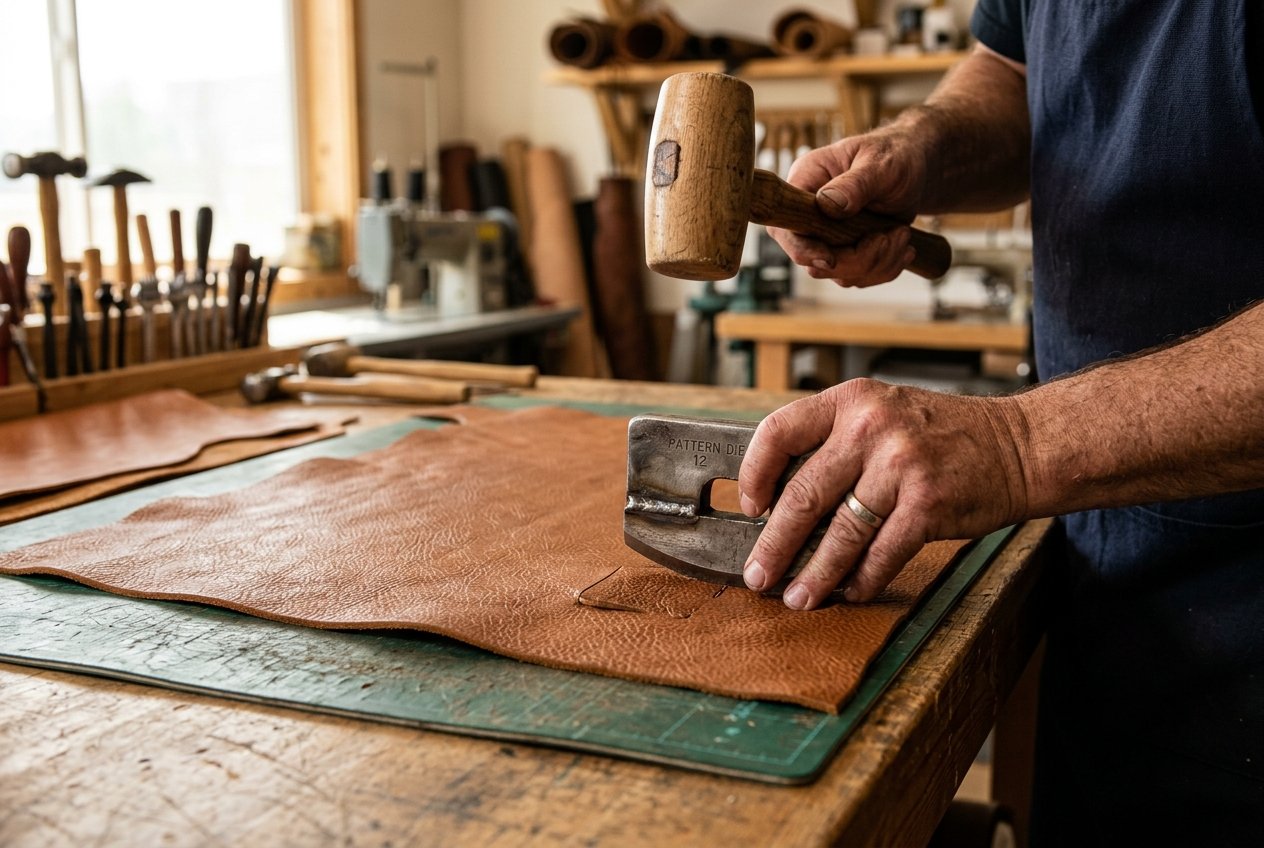
PU Leather: The Practical Middle Ground
Polyurethane leather — commonly called PU leather — is a synthetic material constructed by applying a polyurethane coating to a fabric backing, typically polyester or split leather. It was originally developed as a cost-effective leather substitute, but the best modern PU formulations have become a genuinely capable material in their own right rather than merely a cheaper alternative.
How PU Is Manufactured for Combat Sports Equipment
PU leather for combat sports applications is produced in several different constructions. The most commonly specified grades in OEM manufacturing are:
- PU on polyester backing: The standard mid-market construction. Good colour consistency, lower per-square-metre cost, suitable for training gloves and entry-level products.
- PU on split leather backing: A hybrid construction where the backing layer is genuine split leather rather than fabric. Offers improved tear strength and a more natural feel. Priced between standard PU and full genuine leather.
- Embossed PU (grain-textured): PU with a mechanically embossed surface to mimic full-grain leather appearance. Common in mid-tier private label products where aesthetics are prioritised.
- High-density or military-grade PU: Thicker coating layers with enhanced abrasion resistance. Used for heavy bag outer shells and competition-grade sparring gloves.
PU’s Commercial Strengths
The most significant advantage PU offers OEM buyers is consistency. Every roll of PU material from an approved supplier is dimensionally uniform — consistent thickness, consistent surface texture, consistent colour. That predictability simplifies pattern cutting, reduces material waste, and allows factories to run faster production cycles compared to genuine leather.
PU is also moisture-resistant in a way that genuine leather is not. A leather boxing glove exposed to heavy sweat repeatedly without proper conditioning will dry out and crack along stress lines. A well-specified PU glove sheds surface moisture more effectively, which matters for gym equipment that gets daily shared use without dedicated care between sessions.
For Amazon sellers and private label brands in the entry-to-mid tier, PU hits a price point that makes mass-market retail viable. A genuine leather glove at competitive retail pricing requires either very high volume or market conditions that support a premium margin. PU removes that constraint.
Where PU Falls Short
PU’s weakness is longevity under mechanical stress. The polyurethane coating is applied to — not grown from — its backing material. Over time and under sustained flexion and compression, the bond between the coating and backing degrades. The first visible sign is usually surface cracking along the main flexion points of a glove — the knuckle roll and the wrist break. Once the outer layer begins to separate, it deteriorates rapidly.
This doesn’t make PU a poor choice. It makes it the correct choice at a specific price point and product lifespan expectation. A budget training glove priced at retail for $30–$50 is not expected to last five years. If a buyer understands the product category, PU at that price point is entirely appropriate.
Microfiber: The Premium Synthetic That Changes the Equation
Microfiber — specifically microfiber synthetic leather — is the most technically sophisticated of the three materials. It’s frequently misunderstood because it looks superficially similar to PU, but the engineering behind it is fundamentally different.
What Microfiber Actually Is
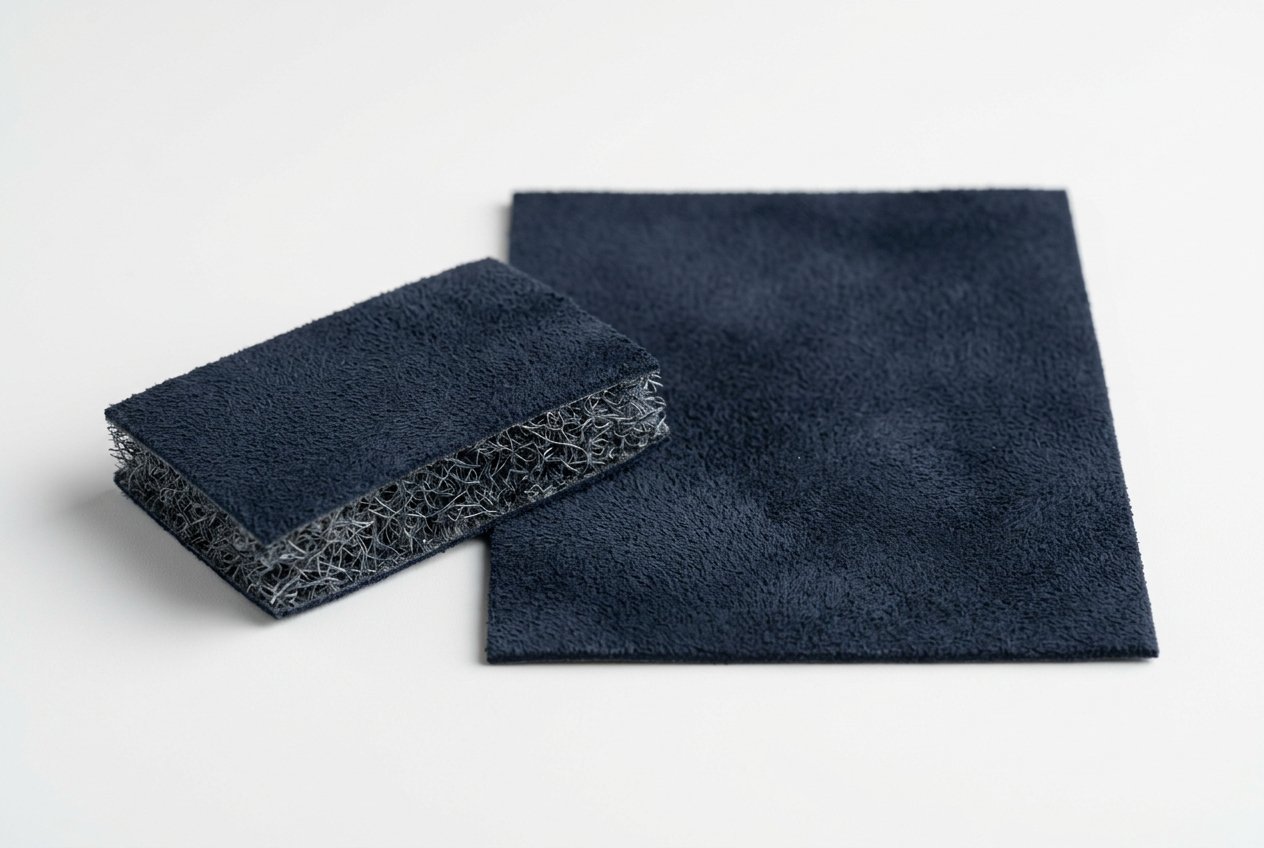
True microfiber synthetic leather — not to be confused with microfiber cleaning cloth — is constructed from ultra-fine polyamide (nylon) or polyester fibres woven into a non-woven base structure, then impregnated with polyurethane resin. The resulting material has an internal fibre structure that is genuinely analogous to the collagen fibre matrix found in genuine leather — which is why high-quality microfiber is legitimately described as the closest synthetic material to real leather rather than a substitute for it.
The fibre diameter in premium microfiber is measured in microns — typically 0.001 to 0.5 denier per filament. These extremely fine fibres are what give the material its notable properties: a soft, tactile surface feel, excellent moisture management, and mechanical strength that holds up far better than standard PU under repeated flexion.
Microfiber Performance in Combat Sports Equipment
In boxing gloves and MMA gear, microfiber outperforms standard PU in several measurable ways:
- Flex durability: The non-woven internal structure resists delamination significantly better than PU coatings on woven backings. Gloves manufactured from premium microfiber maintain surface integrity through a higher number of flex cycles.
- Breathability: Microfiber’s fibre matrix allows for better moisture vapour transmission compared to a PU coating, which is essentially a sealed polymer layer. This matters for gloves and shin guards worn for extended training sessions.
- Surface feel: Premium microfiber has a natural tactile quality — a slight suede-like softness — that is noticeably more comfortable against wrapped hands compared to the harder surface of standard PU.
- Print and emboss retention: Microfiber holds surface textures and embossed logos better over time because the surface is part of the material’s fibre structure rather than an applied coating.
Microfiber’s Commercial Position
Premium microfiber sits above standard PU in cost but typically below genuine leather. For private label brands and OEM buyers who need to avoid animal products — for ethical, religious, or market-positioning reasons — microfiber is the most commercially credible vegan alternative. It allows a brand to make legitimate premium product claims without the limitations of genuine leather.
This is particularly relevant for brands targeting the European market, where animal welfare certification and vegan product lines are increasingly important selling points. A microfiber boxing glove can be positioned as a premium, animal-free product without any sacrifice in performance credentials — which is not a claim that standard PU can support credibly at a premium retail price.
Quality Variation Warning
The biggest risk with microfiber in OEM manufacturing is quality variation between suppliers. “Microfiber” is a broad category. There is a significant difference between entry-grade microfiber (essentially a non-woven fabric with a light PU coating) and premium-grade microfiber from established material suppliers. The price difference per metre can be substantial, and the performance difference is even larger.
When specifying microfiber in your tech pack, always request the material grade designation, fibre density specification, and PU resin impregnation details from your manufacturer. A reputable manufacturer will provide material data sheets on request.
Direct Comparison: Leather vs PU vs Microfiber
| Property | Genuine Leather | PU Leather | Microfiber |
|---|---|---|---|
| Durability | ★★★★★ | ★★★☆☆ | ★★★★☆ |
| Breathability | ★★★★★ | ★★☆☆☆ | ★★★★☆ |
| Surface Feel | ★★★★★ | ★★★☆☆ | ★★★★☆ |
| Moisture Resistance | ★★★☆☆ | ★★★★★ | ★★★★☆ |
| Material Consistency | ★★★☆☆ | ★★★★★ | ★★★★★ |
| Vegan / Animal-Free | ✗ | ✓ | ✓ |
| Cost (Raw Material) | Highest | Lowest | Mid–High |
| Retail Price Positioning | Premium | Entry–Mid | Mid–Premium |
| Market Entry Complexity | High (MOQ, cost) | Low | Medium |
Which Material Works Best for Each Product Type
Material selection isn’t just about the product category — it’s about where that product sits in your brand’s range. The same product type can legitimately use all three materials depending on the tier. Here’s how experienced OEM buyers typically approach each product.
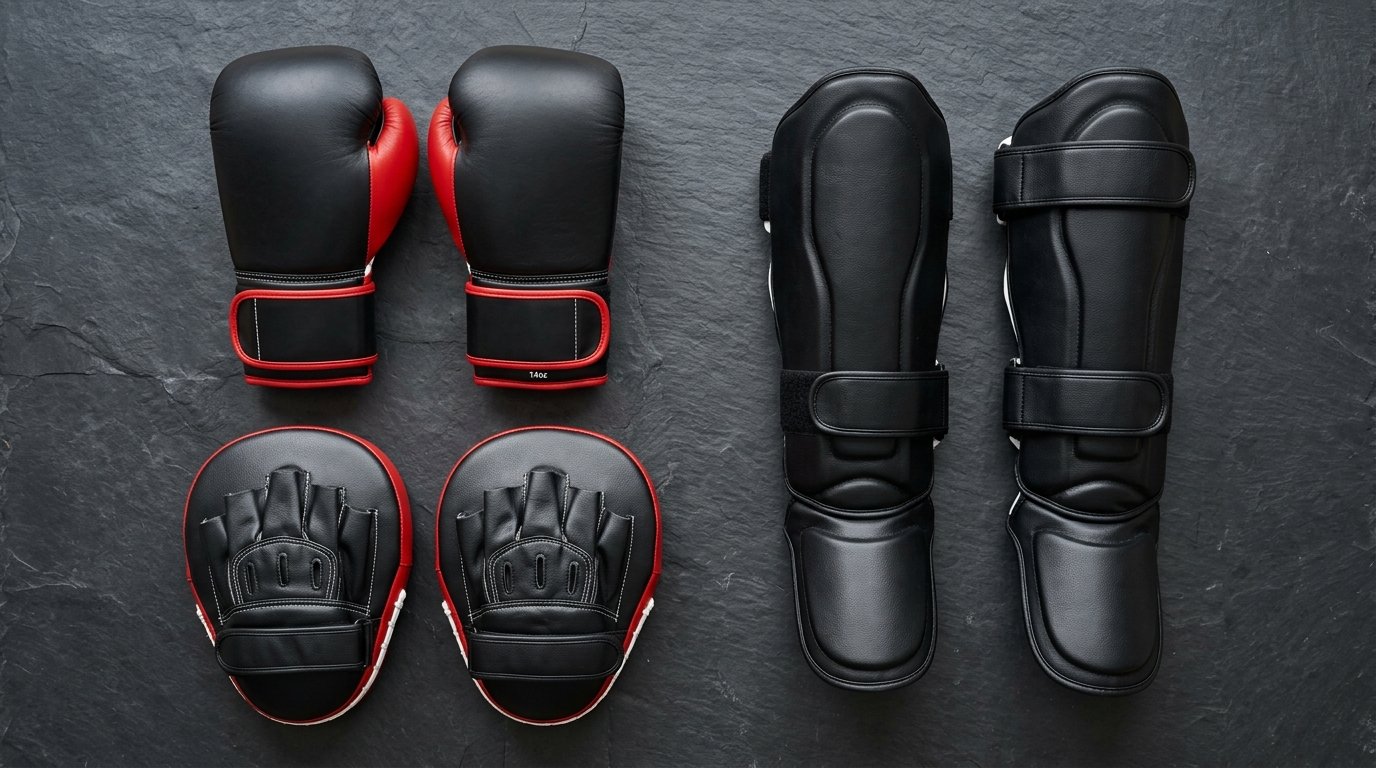
Boxing Gloves
Professional and competition gloves — where the product will take the most punishment and carry the brand’s credibility — are almost universally specified in genuine leather or premium microfiber. Training and sparring gloves destined for mid-market retail commonly use quality PU or microfiber. Entry-level and youth gloves typically use PU.
Muay Thai Shin Guards
Shin guards see sustained abrasive contact. Genuine leather performs best in terms of surface integrity over time, but premium microfiber is an increasingly common specification for mid-to-high range products. Standard PU is widely used for club-level and beginner guards where cost is the primary constraint.
Focus Mitts & Thai Pads
Focus mitts and Thai pads take impact from the front surface and require the outer layer to withstand repeated, concentrated strikes. Genuine leather is preferred for professional pad sets. PU and microfiber are both used for commercial gym supply products, with microfiber offering a better balance of durability and cost at scale.
MMA Gloves
MMA gloves have relatively small outer panels compared to boxing gloves, meaning material costs per unit are lower. Premium MMA brands almost exclusively specify genuine leather or premium microfiber for competition products. Training gloves commonly use PU, though microfiber is gaining ground at the mid-tier as brands seek to differentiate.
Boxing Headgear
Headgear sees sustained sweat exposure and requires a surface that doesn’t degrade under repeated moisture contact. Quality microfiber and genuine leather both perform well here — PU is used in budget-tier headgear but tends to show surface degradation relatively quickly given the sweat load. For club and academy bulk supply, a quality PU with a moisture-barrier treatment is a reasonable specification.
How to Specify Materials Correctly in Your OEM Tech Pack
Understanding the materials is only half the equation. Knowing how to communicate your specification to your manufacturer is what determines whether the product you receive matches what you intended.
For Genuine Leather
- Specify leather grade: full-grain, top-grain, or split
- Specify tanning method: vegetable-tanned or chrome-tanned
- Specify hide origin if relevant to your market (some markets have specific import regulations)
- Specify surface finish: natural grain, embossed, or corrected
- Specify thickness in mm for each panel type (main body, thumb, palm, wrist)
- Request a stamped sample from an approved hide batch before production begins
For PU Leather
- Specify PU coating weight (g/m²) or thickness (mm)
- Specify backing type: polyester woven, non-woven, or split leather
- Specify surface texture: smooth, embossed grain pattern, matte, or gloss
- Specify abrasion resistance standard if you have one (e.g., Martindale rub test cycles)
- Request a delamination pull-test result for your quality standard
For Microfiber
- Specify fibre composition: polyamide (nylon) or polyester, and fibre denier range
- Specify material grade or supplier reference — “microfiber” alone is insufficient
- Specify total thickness and PU resin impregnation weight
- Specify surface finish and any anti-microbial or moisture-management treatments
- Request a flex fatigue test result (number of flex cycles before surface failure)
Material Selection by Market and Brand Positioning
The right material isn’t just about product performance — it’s about where your brand is positioned and what your target market expects.
| Brand Positioning | Recommended Material | Primary Markets |
|---|---|---|
| Professional / Competition | Genuine Leather (full-grain or top-grain) | USA, UK, Australia, UAE |
| Premium Vegan / Ethical Brand | Premium Microfiber | Germany, France, Netherlands, Scandinavia |
| Mid-Market Training Brand | Microfiber or PU on split leather backing | USA, Canada, Australia, Spain |
| Amazon / Mass-Market Retail | Standard PU (polyester backing) | Global Amazon marketplaces |
| Gym Bulk Supply | PU or microfiber depending on durability target | Global — gym chains, academies |
| Youth / Beginner Products | Standard PU | Global |
Common Buyer Mistakes When Choosing Materials
After working with international buyers across multiple markets, several recurring errors come up consistently in material selection decisions.
1. Selecting Material Solely on Sample Feel
A material can feel excellent on initial contact but still perform poorly under sustained use. Flex durability and abrasion resistance are only revealed through testing — not through handling a flat sample. Always request a prototype made in the specified material and evaluate it under realistic conditions before approving production.
2. Mismatching Material to Price Point
Specifying genuine leather on a product you plan to retail at an entry-level price point creates either a margin problem or a compromise somewhere else in the construction. The material should match the overall product economics. A realistic landed cost calculation — including leather, labour, packaging, and freight — needs to support your retail price before you commit to a material.
3. Not Accounting for Market Regulations
Different markets have different regulations around leather goods. The European REACH regulation restricts certain chemicals commonly used in tanning and PU processing. If you’re manufacturing for the EU market, your material supplier and manufacturer should be able to confirm compliance. This is a specification requirement, not an afterthought.
4. Treating Microfiber as a Single Category
As noted earlier, microfiber quality varies enormously. A buyer who specifies “microfiber” without grade or supplier parameters and then receives a disappointing product has effectively approved an undefined specification. Always pin the specification to measurable parameters.
Frequently Asked Questions
QIs genuine leather always better than microfiber for boxing gloves?
Not necessarily. Genuine leather has superior durability and breathability, but premium microfiber can match it closely in performance while offering a vegan credential and better moisture resistance. For brands targeting eco-conscious or vegan markets, premium microfiber is the stronger choice without any significant performance compromise.
QWhat is the minimum order quantity difference between leather and PU gloves?
MOQ varies by manufacturer rather than material alone. Generally, genuine leather products may carry a slightly higher minimum order due to raw material purchasing commitments. PU products often have more flexibility. At Pentapunch, MOQs are determined per product and material specification — contact us for your specific requirements.
QCan I mix materials within the same product — for example, leather main panels with PU palm?
Yes. Hybrid constructions are common in mid-tier products. Genuine leather on the striking surface and high-wear outer panels, combined with PU or microfiber on the inner palm and cuff, is a practical way to balance cost and durability. Your tech pack should specify which material is used on each panel zone.
QHow do I verify my manufacturer is using the material I specified?
Request pre-production material samples tagged with the approved specification. A reputable manufacturer will provide material data sheets from their supplier. During or after production, you can request a third-party material testing report — labs can verify leather type, PU coating weight, and microfiber fibre composition independently.
QWhich material is best for private label boxing gloves on Amazon?
For Amazon’s mid-market price points ($35–$75 retail), quality PU or entry-grade microfiber is the standard. If you’re positioning at the premium tier ($80+), consider premium microfiber, which supports stronger product copy and a more defensible brand narrative than standard PU.
QDoes Pentapunch manufacture in all three materials?
Yes. Pentapunch manufactures combat sports equipment in genuine leather, PU, and microfiber across all product categories including boxing gloves, MMA gear, Muay Thai equipment, shin guards, headgear, and training equipment. OEM, ODM, and private label options are available across all material specifications.
Conclusion: Choose the Material That Serves Your Market
The question isn’t which of these three materials is best. The question is which material is right for your specific product, your target market, and your brand’s positioning. A professional boxing trainer buying gloves for ten years of heavy bag work has different requirements from a beginner buying their first pair. An Amazon private label brand building at volume has different economics from a premium gym equipment distributor supplying professional academies.
Genuine leather leads on durability, breathability, and premium market credibility. PU leads on cost efficiency, consistency, and moisture resistance. Microfiber occupies a practical middle ground — superior to standard PU in almost every measurable performance metric, and the most commercially credible option for brands that need a vegan or ethical product positioning.
Understanding these distinctions before you engage with a manufacturer puts you in a stronger position to specify correctly, evaluate samples critically, and build products that hold up to the claims your brand makes about them.

Ready to Specify Your OEM Combat Sports Equipment?
Our manufacturing team will help you select the right material for your product range, market, and price point. Get a detailed OEM quote or speak directly with our team on WhatsApp.